
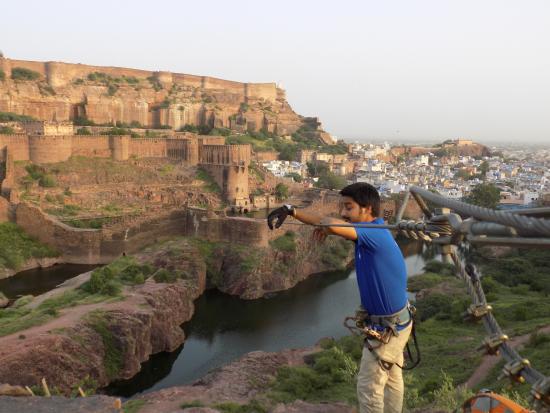
Jodhpur, known as the Blue City of Rajasthan, is one of the most fascinating destinations in northern India. Set on the edge of the Thar Desert, the city combines magnificent forts, royal palaces, ancient temples, colourful markets and traditional neighbourhoods filled with blue-painted houses. Its rich history, vibrant culture and impressive architecture make Jodhpur an essential stop on a Rajasthan journey.
At the heart of the city stands Mehrangarh Fort, one of Rajasthan’s most remarkable historic landmarks. Rising dramatically above the old city, the fort offers spectacular views across Jodhpur and provides an opportunity to discover the stories of the former Marwar kingdom. Around the fort, visitors can explore historic streets, local bazaars, heritage buildings and traditional food experiences.
Mehrangarh Fort – The Symbol of Jodhpur
Mehrangarh Fort is the defining attraction of Jodhpur. Built on a rocky hill above the city, its massive walls, imposing gateways and beautifully decorated interiors reflect the power and artistic traditions of the Rathore rulers.
Inside the fort, visitors can explore courtyards, royal apartments, galleries and historic collections. The museum displays royal palanquins, weapons, costumes, paintings, furniture and other objects associated with the former royal family.
The fort is also an excellent viewpoint. From its elevated position, travellers can see the distinctive blue houses of the old city stretching toward the desert landscape. The contrast between the ancient sandstone walls and the blue neighbourhoods below creates one of Jodhpur’s most memorable views.
The Blue City and Its Old Streets
Jodhpur earned the nickname Blue City because many homes in the historic areas around Mehrangarh are painted in shades of blue. Walking through these neighbourhoods provides a different experience from visiting the major monuments.
The narrow lanes reveal traditional houses, small temples, local shops and everyday scenes of city life. Early morning and late afternoon are particularly pleasant times for exploring, when the streets have a lively yet relaxed atmosphere.
Travellers interested in photography can discover colourful doors, carved façades, small courtyards and rooftop views throughout the old city.
Jaswant Thada
Located close to Mehrangarh Fort, Jaswant Thada is an elegant white-marble memorial dedicated to Maharaja Jaswant Singh II. The monument is surrounded by landscaped gardens and provides a peaceful contrast to the imposing fort.
Its finely carved marble screens allow sunlight to pass through the stone, creating beautiful patterns inside the structure. The elevated location also provides attractive views toward Mehrangarh Fort and the surrounding landscape.
Umaid Bhawan Palace
Another important Jodhpur attraction is Umaid Bhawan Palace, an impressive 20th-century palace built during the reign of Maharaja Umaid Singh. The enormous sandstone complex combines traditional Indian architectural elements with influences from Art Deco and European design.
Part of the palace continues to serve as a royal residence, while other sections have been developed as a heritage hotel and museum. The museum presents aspects of the palace’s history and the life of the former Jodhpur royal family.
The palace is located away from the crowded lanes of the old city and offers a completely different architectural experience.
Clock Tower and Sardar Market
For travellers who want to experience the lively side of Jodhpur, the area around the Clock Tower and Sardar Market is a must-visit. The historic market is filled with shops selling spices, textiles, handicrafts, jewellery, leather goods and traditional Rajasthani products.
The market is also a good place to discover local flavours. Visitors can sample snacks and sweets while exploring the colourful streets around the Clock Tower.
A visit to Sardar Market can easily be combined with a walk through the old city, making it a convenient part of a Jodhpur sightseeing day.
Mandore Gardens
Located a short distance from central Jodhpur, Mandore Gardens is another interesting historical attraction. The site contains old temples, memorials, gardens and beautifully carved architectural structures associated with the former rulers of Marwar.
The red sandstone monuments and landscaped surroundings provide a quieter environment for visitors who want to explore beyond the main attractions of the old city.
Mandore also offers insight into the region’s history before the political centre of Marwar moved to the area around Mehrangarh.
Toorji Ka Jhalra
Jodhpur is also home to traditional stepwells, and Toorji Ka Jhalra is one of the most recognisable. Built as a traditional water-management structure, the stepwell features symmetrical flights of stairs descending toward the water.
Its historic architecture makes it a popular stop for photographers and visitors exploring the old city. The surrounding lanes also contain cafés, shops and restored heritage buildings, making the area enjoyable to explore on foot.
Rao Jodha Desert Rock Park
At the foot of Mehrangarh Fort lies Rao Jodha Desert Rock Park, created to restore the natural landscape around the historic fort. The park contains native desert and semi-desert vegetation adapted to the arid environment of the Marwar region.
Walking trails provide an opportunity to experience Jodhpur’s landscape from a different perspective. The park is particularly interesting for travellers who want to combine history with nature during their city tour.
Jodhpur Food and Local Culture
Jodhpur sightseeing is not complete without experiencing its traditional cuisine. The city is known for dishes and snacks such as mirchi bada, mawa kachori, pyaaz kachori and dal baati churma.
Local restaurants and traditional food stalls provide opportunities to discover the flavours of Rajasthan. Visitors can also explore handicraft shops and markets for textiles, pottery, leather products and colourful souvenirs.
The combination of architecture, food and local traditions gives Jodhpur a strong cultural identity.
Best Time to Explore Jodhpur
The cooler months from October to March are generally comfortable for sightseeing, particularly for visiting forts, markets and outdoor attractions. The daytime temperatures are usually more suitable for walking tours and exploring the historic areas.
During the warmer months, sightseeing can still be arranged, but it is advisable to plan outdoor visits during the morning or late afternoon and allow sufficient time for rest and refreshments.
How to Experience Jodhpur
A well-planned Jodhpur sightseeing experience can include Mehrangarh Fort, Jaswant Thada, the Blue City, Sardar Market, Toorji Ka Jhalra and Umaid Bhawan Palace. Travellers with additional time can visit Mandore Gardens and Rao Jodha Desert Rock Park.
Jodhpur can also be combined easily with other major Rajasthan destinations such as Jaipur, Pushkar, Udaipur, Jaisalmer and Bikaner. A private car with driver allows travellers to explore the city at a comfortable pace while connecting Jodhpur with other destinations across Rajasthan.