
Jaipur, famously known as the Pink City, is one of the most beautiful and culturally rich destinations in India. As the capital of Rajasthan, Jaipur attracts millions of tourists every year with its majestic forts, royal palaces, vibrant bazaars, and rich heritage. The city was founded in 1727 by Maharaja Sawai Jai Singh II and is now a major part of the famous Golden Triangle along with Delhi and Agra.
If you are planning a trip, here is a complete guide to the 10 best tourist spots in Jaipur that showcase the city’s royal charm, architecture, and history.
1. Amber Fort
Amber Fort is one of the most famous tourist attractions near Jaipur. Built in the 16th century by Raja Man Singh I, the fort stands proudly on a hill overlooking Maota Lake. The fort is known for its artistic Hindu-style elements and stunning courtyards.
Inside the fort, visitors can explore beautiful areas such as Sheesh Mahal (Mirror Palace), Diwan-e-Aam, and Ganesh Pol. The light and sound show in the evening beautifully narrates the history of the Rajput kings.
2. Hawa Mahal
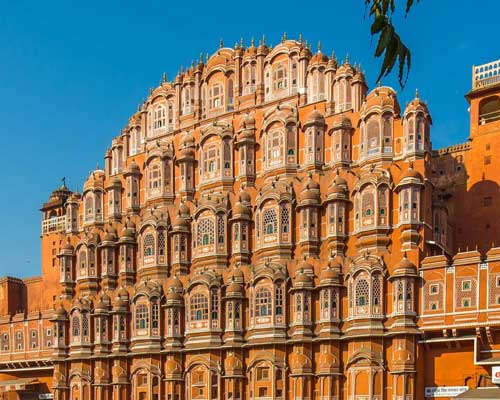
Hawa Mahal, also known as the Palace of Winds, is one of the most iconic landmarks of Jaipur. Built in 1799 by Maharaja Sawai Pratap Singh, this five-story palace has 953 small windows (jharokhas) designed to allow cool air to circulate inside.
It was originally built so royal women could watch street festivals without being seen. The intricate pink sandstone architecture makes it a favorite spot for photography.
3. City Palace
Located in the heart of Jaipur, City Palace, Jaipur is a magnificent complex of courtyards, gardens, and buildings. It was built by Maharaja Sawai Jai Singh II when he established the city.
The palace houses museums displaying royal costumes, weapons, paintings, and artifacts. Some parts of the palace are still home to the royal family of Jaipur.
4. Jantar Mantar
Jantar Mantar, Jaipur is a UNESCO World Heritage Site and one of the largest astronomical observatories in the world. Built in 1734 by Maharaja Sawai Jai Singh II, it contains giant instruments used to measure time, track stars, and predict eclipses.
The most famous structure here is the Samrat Yantra, the world’s largest stone sundial.
5. Nahargarh Fort
Perched on the Aravalli Hills, Nahargarh Fort offers breathtaking views of the entire Pink City. Built in 1734 by Maharaja Sawai Jai Singh II, the fort once served as a retreat for the royal family.
Today it is a popular sunset point where tourists enjoy panoramic city views and explore the beautiful Madhavendra Bhawan palace inside the fort.
6. Jaigarh Fort
Jaigarh Fort stands on the Cheel Ka Teela hill above Amber Fort and was built to protect it. The fort is famous for housing the Jaivana Cannon, once considered the largest cannon on wheels in the world.
The fort’s massive walls, watchtowers, and underground water storage systems demonstrate the strong military architecture of the Rajput era.
7. Jal Mahal
Situated in the middle of Man Sagar Lake, Jal Mahal is one of the most picturesque locations in Jaipur. Built in the 18th century by Maharaja Madho Singh I, the palace appears to float on water.
Although visitors cannot enter the palace, the surrounding lakeside area is perfect for photography, evening walks, and enjoying scenic views.
8. Albert Hall Museum
Albert Hall Museum is the oldest museum in Rajasthan and a must-visit for history lovers. Built in 1887 during the reign of Maharaja Sawai Ram Singh II, the museum displays an impressive collection of paintings, carpets, sculptures, weapons, and ancient artifacts.
One of its most fascinating exhibits is an Egyptian mummy, which attracts many curious visitors.
9. Birla Mandir
Birla Mandir, Jaipur, also known as the Lakshmi Narayan Temple, is a stunning white marble temple located at the base of Moti Dungri Hill. Built by the Birla Group in 1988, the temple is dedicated to Lord Vishnu and Goddess Lakshmi.
The temple looks especially beautiful at night when it is illuminated with soft lights.
10. Galta Ji Temple
Galta Ji Temple is a unique temple complex located in the hills outside Jaipur. Often called the Monkey Temple, it is famous for its natural water springs and sacred kunds (water tanks).
The temple attracts pilgrims and tourists alike, especially during religious festivals when devotees come to take holy dips in the sacred water.